Reclaiming what I had forgotten
When I was at university, YouTube had just come out. It was 2007, and we mostly used it to watch funny animal clips or episodes of Britain’s Got Talent. I didn’t think of it as a learning space. Back then, if you wanted to study literary theory, you had to be in the right programme, reading the right books, with the right people.
I have an Honours degree in Afrikaans and Dutch, and I studied literature throughout my undergraduate years. We read serious texts, and we did engage with theory. I vaguely remember learning about historicism and postmodernism, and I recall encountering texts about structuralism and feminism, but at the time, I understood those more as literary eras than as frameworks or criticism. For some reason, I missed the theoretical link between criticism and the practical experience of reading and classroom discussions.
Now, in the process of proposing a Master’s in English, I’m trying to close the gap between the reader I’ve been and the scholar I want to become. One night, out of curiosity, I clicked on a Yale Open Course playlist: Introduction to Theory of Literature, taught by Professor Paul Fry (link below). I expected something dry, maybe useful. What I didn’t expect was a quiet intellectual reckoning.
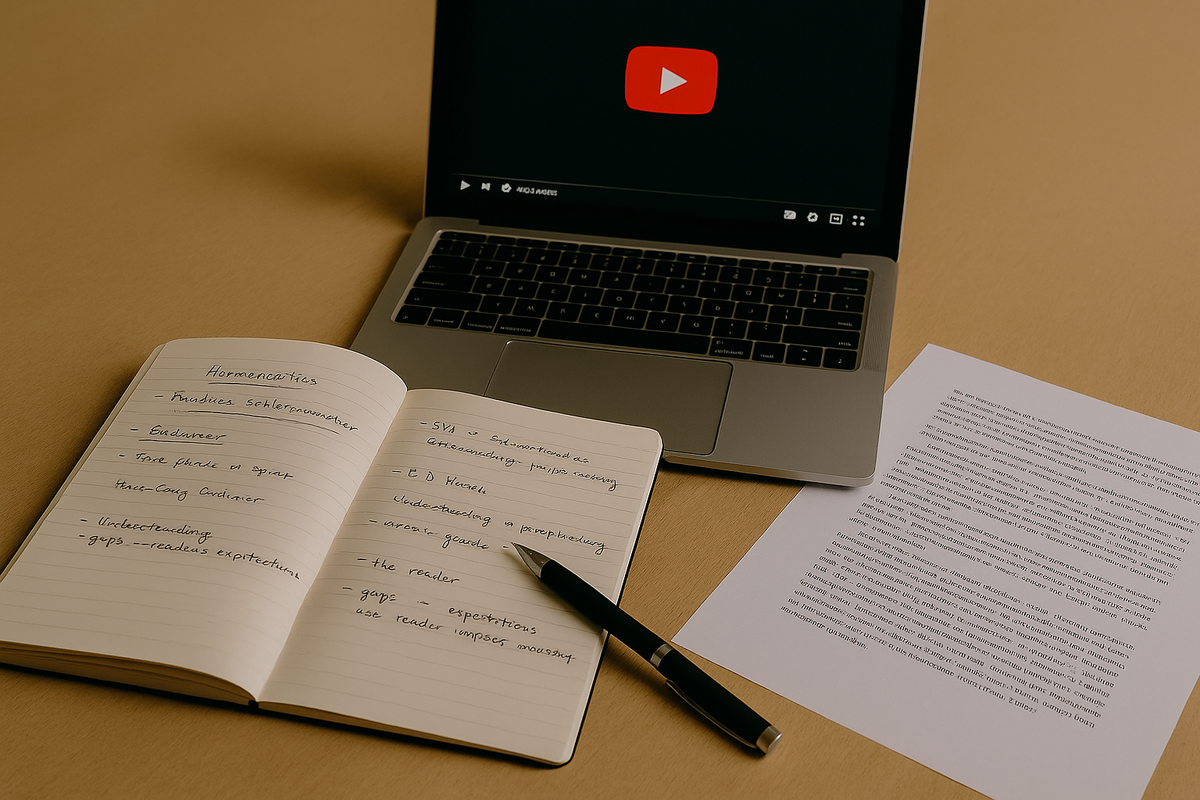
He began with hermeneutics, a term I had heard before but had to Google just to get my bearings. That was when I realised how much I’d lost contact with the terminology of literary study - a very humbling moment. Fry introduced Schleiermacher and moved through Gadamer and Hirsch. He explained how interpretation is not just about retrieving meaning, but about how we understand and reframe significance. The discussion around understanding and paraphrasing, and the idea that there is always a gap between the reader and the text, reflected a way of thinking I had always been practising, even if I didn’t have or had forgotten the academic language to phrase it.
In the fourth lecture came Wolfgang Iser. In his essay “The Reading Process,” he describes how narratives create meaning through a rhythm of expectation and surprise. That structure, the tension between what a text offers and what it withholds, is something I have always paid attention to as a reader. It helps to understand where those instincts fit within the larger map of literary thinking.
This also clarified something about how I’ve been approaching allegory. That same dynamic of delay, layering, and withheld clarity is what makes allegorical reading so compelling to me. You are always reading on two levels at once, the literal and the symbolic, and the space between them is where the ethical questions start to emerge.
What I’m learning through watching these YouTube videos is that it’s entirely possible to teach yourself, if you want to. We live in an age where entire university syllabi are online, where you can listen to lectures from your living room in Beijing or your kitchen in Bloemfontein. If you’re disciplined, curious, and willing to humble yourself at times, you can join the conversation. Maybe not as an expert (not yet) but as a serious reader with serious questions. I'm remembering, relearning, reconstructing, and upskilling. I'm working diligently to try to catch up the what I've missed (and forgotten) the 15 years between my Honours and now, AND I'm doing it without prompting - all on my own.
I believe that should count for something.
I’m not saying we should replace formal academic training at universities. I’m saying self-directed independent study should be more seriously respected. There are readers out there, like me, who have spent years deeply engaging with literature simply by reading (and maybe teaching high school), just without keeping the established theories and frameworks in mind.
Watching those videos isn't just teaching me theory; it is helping me remember the curious student and reader I’ve always been, and honestly, it feels great.
And now, I’m bringing that reader to the MA. Fully. Ready.
Fry, Paul H. Introduction to Theory of Literature, Lecture 4: Hermeneutics. YaleCourses, 2 Feb. 2009, www.youtube.com/watch?v=cbJW5nGnoGU. Accessed 13 May 2025.